We have moved to a new Website Check Now

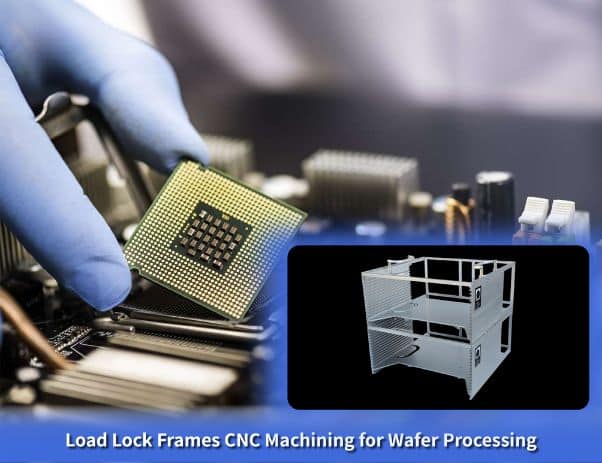
Load Lock Frames CNC Machining for Wafer Processing

Load lock frames are sophisticated engineered structural components that permit atmospheric-to-vacuum transfer chambers for semiconductor fabrication equipment. This enables systems to rapidly load and unload wafers. At Zintilon, we manufacture these frames using state-of-the-art CNC multi-axis milling technology. This allows us to create high-quality sealing surfaces, determine structural rigidities, and control port alignments for optimal wafer throughput and contamination control, especially in the cleanroom sealing environments of the semiconductor fabrication equipment.
  • Machining for complex frame geometries and sealing interfaces
  • Tight tolerances up to ±0.005 in
  • Precision milling, seal surface finishing & vacuum compatibility
  • Support for rapid prototyping and full-scale production
  • ISO 9001-certified semiconductor equipment manufacturing

Trusted by 15,000+ businesses

Why Semi-Concductor Companies
Choose Zintilon

prductivity

Increased Productivity

Engineers get time back by not dealing with immature supply chains or lack of supply chain staffing in their company and get parts fast.

10x

10x Tighter Tolerances

Zintilon can machine parts with tolerances as tight as+/ - 0.0001 in -10x greater precision compared to other leading services.

world

World Class Quality

Zintilon provides aerospace parts for leading aerospace enterprises, verified to be compliant with ISO9001 quality standard by a certified registrar. Also, our network includes AS9100 certified manufacturing partners, as needed.

From Prototyping to Mass Production

Zintilon supplies world-wide semiconductor equipment manufacturers, cluster tool suppliers and wafer processing systems with CNC machining for load lock frame and transfer module components.

Prototype Load Lock Frames

Acquire high quality prototypes of load lock frames that precisely reflect your end design. Evaluate vacuum cycling, confirm door alignment, and assess rapid pump-down capability prior to initiating full-scale manufacturing.


Key Point

  • Rapid prototyping with high precision

  • Tight tolerances (±0.005 in)

  • Test design, sealing, and structural integrity early

3 Axis CNC Machined Stainless Steel Passivation

EVT – Engineering Validation Test

Rapid prototyping of load lock frames is done to guarantee that all vacuum and throughput specifications are achieved. This ensures that early problems are identified to allow seamless full-scale semiconductor production.


Key Point

  • Validate prototype functionality

  • Rapid design iterations

  • Ensure readiness for production

Anodized Aluminum 1024x536

DVT – Design Validation Test

Using various materials, evaluate the vacuum cycling performance of the load lock frames to determine design accuracy and optimal wafer handling before moving onto mass production.


Key Point

  • Confirm design integrity and sealing

  • Test multiple materials and configurations

  • Ensure production-ready performance

design aluminium

PVT – Production Validation Test

Identify large-scale production challenges concerning load lock frames to define to-be-expected production consistency and efficiency. This helps to establish large-scale production of load lock frames.


Key Point

  • Test large-scale production capability

  • Detect and fix process issues early

  • Ensure consistent part quality

Anodized Titanium Fastener

Mass Production

Manufacture high quality load lock frames that are vacuum compatible in a cost effective manner and within the required time frames for guaranteed wafer transfers and on time delivery to semiconductor equipment manufacturers and fab tool suppliers.


Key Point

  • Consistent, high-volume production

  • Precision machining for vacuum integrity

  • Fast turnaround with strict quality control

production

Simplified Sourcing for
the New Energy Industry

Our aviation industry parts manufacturing capabilities have been verified by many listed companies. We provide a variety of manufacturing processes and surface treatments for aerospace parts including titanium alloys and aluminum alloys.

Explore Other Semiconductor Components

Browse our complete selection of CNC machined semiconductor components, crafted for durability and ultra-tight tolerances. From precision tooling and fixture parts to vacuum chambers and wafer handling systems, we deliver solutions tailored to advanced semiconductor production.

Wafer Processing Load Lock Frames Machining Capabilities

Our CNC Machining Centers along with vacuum testing equipment and experienced semiconductor machinists provide Load Lock Frames CNC Machining for Wafer Processing. Every component spanning from single-wafer load locks and batch load lock frames to robotic transfer interfaces with sealing surfaces is designed to ensure optimal pump-down time, wafer throughput, and contamination isolation for critical transfer surfaces between robotic and manual wafer handling.

Precision in multi-axis milling is provided along with machining of sealing surfaces, integration of ports for surface treatments to achieve perfect door alignment and leak-tight operation, helium leak testing, and verification of flatness. Load lock frames are constructed from vacuum compatible and pressure cycle tolerant materials that provide structural integrity in semiconductor manufacture as well as aluminum alloys (6061-T6, 5083) or stainless steel (304L, 316L) or anodized aluminum.
milling

CNC Machining

sheet metal

Sheet Metal Fabrication

edm

Wire EDM

Aerospace
Materials & Finishes

Materials
We provide a wide range of materials, including metals, plastics, and composites.
Finishes
We offer superior surface finishes that enhance part durability and aesthetics for applications requiring smooth or textured surfaces.

Specialist Industries

you are welcome to emphasize it in the drawings or communicate with the sales.

Materials for Load Lock Frames

Our CNC machine shop has Load Lock Frames Machining for Wafer Processing. With over 10 vacuum-compatible metals and structural alloys, we offer consistent quality and rapid pump-down performance for rapid prototyping and precision transfer module manufacturing.
Aluminum Image

High machinability and ductility. Aluminum alloys have good strength-to-weight ratio, high thermal and electrical conductivity, low density and natural corrosion resistance.

Price
$ $ $
Lead Time
< 7 days
Tolerances
Down to ±0.003 mm
Max part size
3000*2200*1100 mm
Min part size
2*2*2 mm
Steel Image

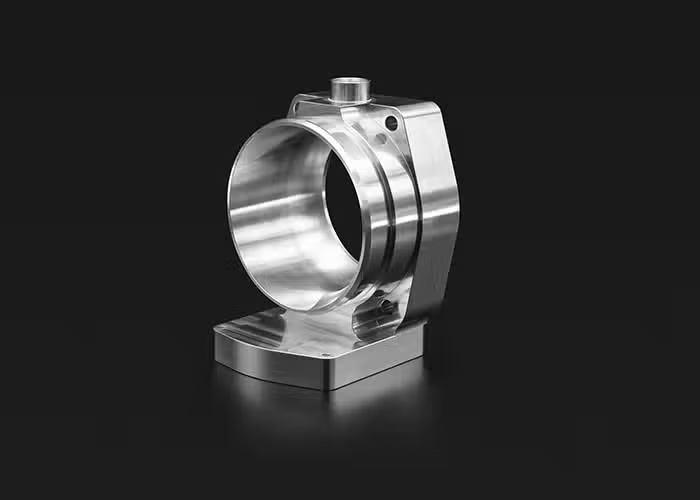
Steel is a strong, versatile, and durable alloy of iron and carbon. Steel is strong and durable. High tensile strength, corrosion resistance heat and fire resistance, easily molded and formed. Its applications range from construction materials and structural components to automotive and aerospace components.
Price
$ $ $ $ $
Lead Time
< 10 days
Tolerances
Down to ±0.001 mm (routing)
Max part size
3000*2200*1100 mm
Min part size
2*2*2 mm
Stainless steel Image

Stainless steel alloys have high strength, ductility, wear and corrosion resistance. They can be easily welded, machined and polished. The hardness and the cost of stainless steel is higher than that of aluminum alloy.

Price
$ $ $
Lead Time
< 7 days
Tolerances
Down to ±0.005 mm
Max part size
3000*2200*1100 mm
Min part size
2*2*2 mm
Titanium Image

Titanium is an advanced material with excellent corrosion resistance, biocompatibility, and strength-to-weight characteristics. This unique range of properties makes it an ideal choice for many of the engineering challenges faced by the medical, energy, chemical processing, and aerospace industries.

Price
$$$
Lead Time
< 10 days
Tolerances
Down to ±0.005 mm
Max part size
3000*2200*1100 mm
Min part size
2*2*2 mm
Bronze Image

Highly resistant to seawater corrosion. The material’s mechanical properties are inferior to many other machinable metals, making it best for low-stress components produced by CNC machining.

Price
$ $ $ $ $
Lead Time
< 10 days
Tolerances
Down to ±0.005 mm
Max part size
3000*2200*1100 mm
Min part size
2*2*2 mm
Brass Image

Brass is mechanically stronger and lower-friction metal properties make CNC machining brass ideal for mechanical applications that also require corrosion resistance such as those encountered in the marine industry.

Price
$$$
Lead Time
< 10 days
Tolerances
Down to ±0.005mm
Max part size
3000*2200*1100 mm
Min part size
2*2*2 mm
Copper Image

Few metals have the electric conductivity that copper has when it comes to CNC milling materials. The material’s high corrosion resistance aids in preventing rust, and its thermal conductivity features facilitate CNC machining shaping.
Price
$$$
Lead Time
< 10 days
Tolerances
Down to ±0.005 mm
Max part size
3000*2200*1100 mm
Min part size
2*2*2 mm
Magnesium Image

Due to the low mechanical strength of pure magnesium, magnesium alloys are mainly used. Magnesium alloy has low density but high strength and good rigidity. Good toughness and strong shock absorption. Low heat capacity, fast solidification speed, and good die-casting performance.

Price
$ $ $ $
Lead Time
< 7 days
Tolerances
Down to ±0.005 mm
Max part size
3000*2200*1100 mm
Min part size
2*2*2 mm
Iron Image

Iron is an indispensable metal in the industrial sector. Iron is alloyed with a small amount of carbon – steel, which is not easily demagnetized after magnetization and is an excellent hard magnetic material, as well as an important industrial material, and is also used as the main raw material for artificial magnetism.

Price
$ $ $ $ $
Lead Time
< 10 days
Tolerances
Down to ±0.005 mm
Max part size
3000*2200*1100 mm
Min part size
2*2*2 mm
Zinc Image

Zinc is a slightly brittle metal at room temperature and has a shiny-greyish appearance when oxidation is removed.

Price
$ $ $ $ $
Lead Time
< 10 days
Tolerances
Down to ±0.005 mm
Max part size
3000*2200*1100 mm
Min part size
2*2*2 mm
Let’s Build Something Great, Together

FAQs: Load Lock Frames for Wafer Processing Applications

Load lock frames are structural supports for atmospheric-to-vacuum transfer chambers, allowing wafer exchanges between ambient cleanrooms and vacuum processing without venting main chambers. These include single-wafer load locks for 200mm, 300mm, and 450mm wafers, achieving pump-down times under 10 seconds, batch load locks for high-volume manufacturing that handle 25 to 50 wafers simultaneously, mini-environment load locks with FOUP interfaces and robotic wafer handling, loadport frames to automated material handling systems, side-access load locks for dual-transfer capability, and specialty frames like cryogenic load locks maintaining minus 150°C, cassette load locks for legacy equipment, and ultra-high vacuum load locks achieving base pressures over 10⁻⁸ Torr.

The use of Aluminum 6061-T6 and 5083 (which are two types of aluminum alloys) enables lightweight construction which allows tools to have compact footprints, excellent machinability for the construction of complex port patterns and mounting interfaces, good range of thermoconductivity for rapid temperature stabilization, adequacy of outgassing rates characterized below 10⁻⁷ Torr-liters per second per square centimeter, which enables pump-down to take less than 10 seconds, and cost effectiveness for high-throughput manufacturing tools. The structural rigidity of stainless steel 304L and 316L and also the prevention of deflection of over 0.2 millimeters during vacuum differentials makes such stainless steel a preferred choice as it also has superior corrosion resistance to cleanroom chemicals and ultra-low outgassing below 10⁻⁸ Torr-liters per second which is achieved through electropolishing as well as longevity of more than 20 years. The anodizing of aluminum increases its hardness which is beneficial at the door sealing surfaces wherein wear is reduced from millions of vacuum cycles. The plasma- enhanced systems also benefit from the electrical insulation

Load lock frames are designed using multi-axis CNC milling, which integrates door mounting flanges, vacuum ports, and access openings for robotic arms. The precision face mills are leveled and flattened to under 0.005 for the O-ring doors and interfaces. The Contracted frames use coordinate drilled patterned bolts to maintain door actuators and vacuum valves within a precision of 0.005 and the ports are leveled to 1.6 Ra for sealing. The machines are also designed to bored to precision for the pump-down ports and wafer transfer of the countersink features. The frames are also designed with a stress-relieved heated, with threads milled for mounting and countersunk for recessed fasteners. The Stainless steel frames are electropolished for optimal outgassing, with Ra surfaces, for a protective grade.

The tolerances on load lock frames are as described; with a leak tightness of above 10⁻⁸ std cc super helium per second, 0.005 within and direct aligned to sensors and ports, and 0.005 within bolt holes to actuators for aligned ports. Tight control within 0.010 perpendicular and opposing surfaces for doors, and 1.6 Ra microns on sealing surface to tighten O-rings, and finally within 0.020 on the entire assembly to integratte to cluster.

All components of Zintilon are produced in line with ISO 9001 approved quality management systems with all the traceability, helium leak tested documentation down to 10⁻⁸ std cc per second sealing performance of the door and leak tested seal of the closing surface, relevant SEMI standards for flatness of sealing surfaces, and inter-contaminate isolation of atmospheric and vacuum environments with controlled pump down times with greater than 10 million vacuum cycles.

Standard aluminum load lock frames for single-wafer systems, which include machining, anodizing, and quality verification, and take 15-22 business days to complete. On the other hand, complex stainless steel batch load lock frames take 6-9 weeks, whereas prototype frames for pump-down testing, which allow for rapid development and optimization of a cluster tool along with throughput, can be constructed in a 10-14 day period.

The available finishing options include: hard anodizing where a 25 to 50-micron coating is applied to the aluminum for wear resistance on the door sealing interfaces which also includes corrosion protection, also, there is the electropolishing where 10 to 30 microns are removed to reach an Ra below 0.8 microns which reduces outgassing and particle adhesion, to clear anodizing for moderate corrosion protection for brightening, the stainless steel may also be vacuum baked to reduce outgassing rates to allow for rapid pump-down, beaded blasting and precision machining of O-ring grooves for Ra levels below 1.6 microns for ideal sealing surfaces to facilitate seal compression, the surface may also be passivated, and bead blasting as well as the designed stainless still also be vacuum baked to reduce outgassing rates for rapid pump-down.

Yes, we provide rapid prototypes for vacuum fixture development for semiconductors, low volume production specialized for cluster tools and R&D systems which produce between 5 to 50 frames and for medium volume production for commercially wafer processing equipment which produces hundreds to thousands of frames per year with fully dimensional CMM inspection, flatness tested with precision levels, helium leak tested on sealing surfaces, measured and structural tested for surface finish, and certified for out gassing analysis by ASTM E595 and other material certifications listed in our deck which includes all the structural components per our scope of work and R&D systems for medium volume production based off of 5 to 50 frames for cluster tools.

Certainly. We also produce load locks designed for extreme t hroughput with pump-down times less than 5 seconds, frames for cryogenic wafer transfer at -150°C, ultra-high vacuum load locks for reaching analytical requirements greater than 10⁻⁹ Torr, and custom large-format frames for 450mm wafer processing. Specialized dual chamber load locks that load and unload wafer stacks simultaneously have also been designed, compact load locks for cluster tools with limited space, and custom integrated load locks with pre-clean plasma sources, wafer degassing, orientation sensors, and RFID systems for m anufacturing execution systems.

Sealing flat surfaces within 0.005” results in O-ring seals leak rates lower than 10⁻⁸ std cc/sec He and prevents atmospheric contamination. Oxygen and moisture in the atmosphere degrade thin films and etches. Proximity of ports within ±0.005” facilitates the positioning of valves and sensors enabling rapid sequential pump-downs to pressures lower than 10⁻⁴ Torr in under 10 seconds and maintains the 300mm single-wafer systems at 120 wafers/hour. Adequate stiffness of the structure maintains the beam doors vacuum aligned over millions of cycles when compliant door frames prevents frame deflection of 0.2mm under the atmospheric pressure differential of 101 kPa. Proper patterns of the bolt holes guarantee reproducible mounting of door actuators to prevent binding and the seals from failing. Surface finishes with Ra less than 0.8 microns results in lower outgassing and facilitates faster pump-downs to base pressure. Optimized geometry minimizes the internal volume of the frame to improve the evacuation rate. Pump-down time is reduced with strategic frame geometry and improved surface finishes. Surface treatments at the door edges maximize cycles between maintenance while leak-tight operation is maintained over 10 million cycles which is 15 years of continuous operation at the fab.
Proper manufacturing allows reliable atmospheric-to-vacuum transfers during semiconductor fabrication, while maintaining maximized wafer throughput, contamination isolation between environments, and exceeding 98 percent equipment uptime in high-volume manufacturing facilities that handle 200mm, 300mm, and the emerging 450mm wafers.
Got any more questions?