We have moved to a new Website Check Now

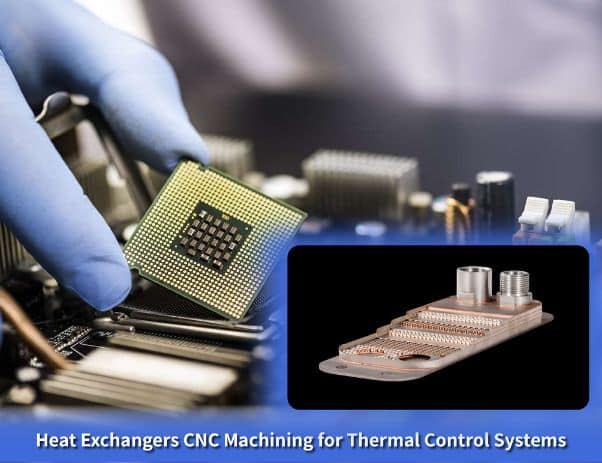
Heat Exchangers CNC Machining for Thermal Control Systems

Heat exchangers for thermal control systems are precisely machined for fluid transfer. They remove or add heat and maintain required operating temperatures of industrial equipment and processing systems. Zintilon specializes in CNC machining of heat exchanger plates, manifolds and cooling blocks to provide excellence for thermal conductivity, leak-proof functioning, and uniform temperature distribution for dependable and reliable performance in demanding thermal management applications.
  • Machining for complex channel geometries and fluid distribution networks
  • Tight tolerances up to ±0.005 in for sealing surfaces
  • Precision milling, drilling & pressure testing
  • Support for rapid prototyping and full-scale production
  • ISO 9001-certified manufacturing with thermal systems expertise

Trusted by 15,000+ businesses

Why Medical Companies
Choose Zintilon

prductivity

Fast Delivery

A professional engineering team that can respond quickly to customer needs and provide one-stop services from design to production in a short period of time to ensure fast delivery.

10x

High Precision

We are equipped with automated equipment and sophisticated measuring tools to achieve high accuracy and consistency, ensuring that every part meets the most stringent quality standards.

world

ISO13485 Certified

As a ISO13485 certified precision manufacturer, our products and services have met the most stringent quality standards in the automotive industry.

From Prototyping to Mass Production

Zintilon offers CNC machining for heat exchangers and associated thermal control components to semiconductor equipment manufacturers, laser system integrators, and industrial cooling system suppliers around the globe.

Prototype Heat Exchangers

We will provide you with assembly prototypes for heat exchangers that will achieve your prototypes precision and accuracy. Conduct your thermal performance tests, pressure drop assessments and leak testing, all at the prototype stage, and before beginning thermal control production at a larger scale.


Key Point

  • Rapid prototyping with high precision

  • Tight tolerances (±0.005 in)

  • Test design, thermal transfer, and flow characteristics early

3 Axis CNC Machined Stainless Steel Passivation

EVT – Engineering Validation Test

Thermal and pressure testing of prototypes must be completed in order to provide quick development for subsequent scales of thermal management component manufacturing. This minimizes the likelihood of significant problems arising at the thermal and pressure testing stage of prototype development.


Key Point

  • Validate prototype functionality

  • Rapid design iterations

  • Ensure readiness for production

Anodized Aluminum 1024x536

DVT – Design Validation Test

Prior to mass production you will need to test and confirm thermal performance, pressure integrity, and prototype design using various materials and channel configurations to determine optimal configurations and patterns for heat exchange.


Key Point

  • Confirm design integrity and cooling capacity

  • Test multiple materials and flow patterns

  • Ensure production-ready performance

design aluminium

PVT – Production Validation Test

Prior to beginning a full heat exchanger production run, verify for large scale production in order to determine efficiencies and identify possible challenges in manufacturing.


Key Point

  • Test large-scale production capability

  • Detect and fix process issues early

Anodized Titanium Fastener

Mass Production

The heat exchangers we manufacture are industrial-grade, high quality, and we meet the thermal performance and delivery deadlines for equipment manufacturers and thermal system integrators.


Key Point

  • Consistent, high-volume production

  • Precision machining for thermal management quality

  • Fast turnaround with strict quality control

production

Simplified Sourcing for
the Medical Industry

Our precision manufacturing capabilities are widely used in the medical industry. CNC machining, sheet metal fabrication and other technologies ensure high precision and heat resistance in the application of medical grade materials such as titanium alloy and PEEK.

Explore Other Semiconductor Components

Browse our complete selection of CNC machined semiconductor components, crafted for durability and ultra-tight tolerances. From precision tooling and fixture parts to vacuum chambers and wafer handling systems, we deliver solutions tailored to advanced semiconductor production.

Thermal Control Systems Heat Exchangers Machining Capabilities

The machining of Heat Exchangers for CNC Machining for Thermal Control Systems is complete. From liquid-cooled cold plates, we manufacture air-to-liquid heat exchangers, microchannel cooling blocks with precision flow-optimization, and a range of other components. Each component is designed for effective heat removal, sustained pressure drop and reliability for the following applications, semiconductor processing, laser cooling, and other industrial thermal management.

We skillfully cover the spectrum, from deeply integrated CNC milling of manifold blocks and channel networks, through deep hole drilling of coolant passageways, all the way to EDM machining of complex cooling geometries, and to finishing touches of corrosion resistant coatings, helium leak testing, and validation of thermal performance. Heat exchangers are composed of various blocks and channel networks, which are made of aluminum alloys (6061-T6, 6063-T5), copper (C101, C110), stainless steel (304, 316), or brass (C360, C377) as well as various other alloys. This allows for great thermal exchange, pressure and chemical compatibility, and the stamina to endure continuous flow of water, glycols, and specialized coolant fluids.
milling

CNC Machining

sheet metal

Sheet Metal Fabrication

edm

Wire EDM

Aerospace
Materials & Finishes

Materials
We provide a wide range of materials, including metals, plastics, and composites.
Finishes
We offer superior surface finishes that enhance part durability and aesthetics for applications requiring smooth or textured surfaces.

Specialist Industries

you are welcome to emphasize it in the drawings or communicate with the sales.

Materials for Heat Exchangers Components

Aluminum alloys (6061-T6, 6063-T5), copper (C101, C110), stainless steel (304, 316), or brass (C360, C377) as well as various other alloys permit the construction of the heat exchangers blocks and channel networks. This allows for great thermal exchange, pressure and chemical compatibility, and the stamina to endure continuous flow of water, glycols, and specialized coolant fluids.
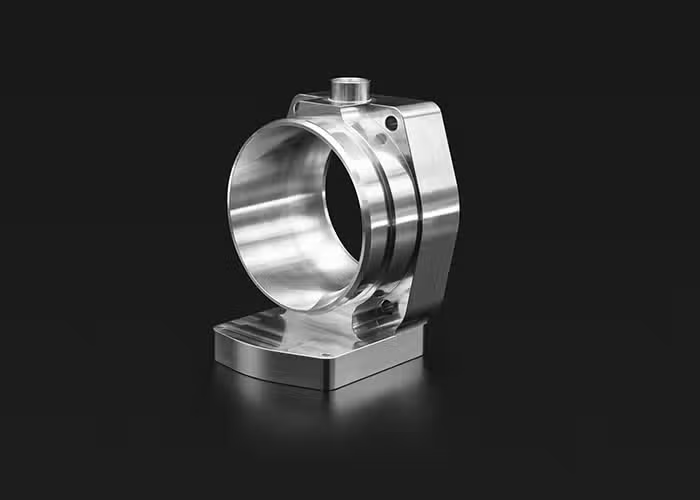
Aluminum Image

High machinability and ductility. Aluminum alloys have good strength-to-weight ratio, high thermal and electrical conductivity, low density and natural corrosion resistance.
Price
$ $ $
Lead Time
< 7 days
Tolerances
Down to ±0.003 mm
Max part size
3000*2200*1100 mm
Min part size
2*2*2 mm
Stainless steel Image

Stainless steel alloys have high strength, ductility, wear and corrosion resistance. They can be easily welded, machined and polished. The hardness and the cost of stainless steel is higher than that of aluminum alloy.

Price
$ $ $
Lead Time
< 7 days
Tolerances
Down to ±0.005 mm
Max part size
3000*2200*1100 mm
Min part size
2*2*2 mm
Steel Image

Steel is a strong, versatile, and durable alloy of iron and carbon. Steel is strong and durable. High tensile strength, corrosion resistance heat and fire resistance, easily molded and formed. Its applications range from construction materials and structural components to automotive and aerospace components.

Price
$ $ $ $ $
Lead Time
< 10 days
Tolerances
Down to ±0.001 mm (routing)
Max part size
3000*2200*1100 mm
Min part size
2*2*2 mm
Titanium Image

Titanium is an advanced material with excellent corrosion resistance, biocompatibility, and strength-to-weight characteristics. This unique range of properties makes it an ideal choice for many of the engineering challenges faced by the medical, energy, chemical processing, and aerospace industries.

Price
$$$
Lead Time
< 10 days
Tolerances
Down to ±0.005 mm
Max part size
3000*2200*1100 mm
Min part size
2*2*2 mm
Bronze Image

Highly resistant to seawater corrosion. The material’s mechanical properties are inferior to many other machinable metals, making it best for low-stress components produced by CNC machining.

Price
$ $ $ $ $
Lead Time
< 10 days
Tolerances
Down to ±0.005 mm
Max part size
3000*2200*1100 mm
Min part size
2*2*2 mm
Brass Image

Brass is mechanically stronger and lower-friction metal properties make CNC machining brass ideal for mechanical applications that also require corrosion resistance such as those encountered in the marine industry.

Price
$$$
Lead Time
< 10 days
Tolerances
Down to ±0.005mm
Max part size
3000*2200*1100 mm
Min part size
2*2*2 mm
Copper Image

Few metals have the electric conductivity that copper has when it comes to CNC milling materials. The material’s high corrosion resistance aids in preventing rust, and its thermal conductivity features facilitate CNC machining shaping.

Price
$$$
Lead Time
< 10 days
Tolerances
Down to ±0.005 mm
Max part size
3000*2200*1100 mm
Min part size
2*2*2 mm
Zinc Image

Zinc is a slightly brittle metal at room temperature and has a shiny-greyish appearance when oxidation is removed.

Price
$ $ $ $ $
Lead Time
< 10 days
Tolerances
Down to ±0.005 mm
Max part size
3000*2200*1100 mm
Min part size
2*2*2 mm
Iron Image

Iron is an indispensable metal in the industrial sector. Iron is alloyed with a small amount of carbon – steel, which is not easily demagnetized after magnetization and is an excellent hard magnetic material, as well as an important industrial material, and is also used as the main raw material for artificial magnetism.
Price
$ $ $ $ $
Lead Time
< 10 days
Tolerances
Down to ±0.005 mm
Max part size
3000*2200*1100 mm
Min part size
2*2*2 mm
Magnesium Image

Due to the low mechanical strength of pure magnesium, magnesium alloys are mainly used. Magnesium alloy has low density but high strength and good rigidity. Good toughness and strong shock absorption. Low heat capacity, fast solidification speed, and good die-casting performance.
Price
$ $ $ $
Lead Time
< 7 days
Tolerances
Down to ±0.005 mm
Max part size
3000*2200*1100 mm
Min part size
2*2*2 mm
Let’s Build Something Great, Together

FAQs: Heat Exchangers for Thermal Control Systems Applications

Heat exchangers are devices that help keep equipment in a certain range of operating temperatures by adding or removing heat. There are different types of heat exchangers which include: liquid cooling cold plates, which have internal networks of channels and are bonded to the equipment surfaces; shell and tube heat exchangers which have internal tube bundles and serve high capacity applications; plate heat exchangers, which have stacked and corrugated plates and create multiple flow passages; air-cooled heat exchangers, which have finned surfaces designed for liquid-to-air heat transfer; microchannel heat exchangers, which have channels that are less than 1mm and are used for compact and high-efficiency cooling; brazed plate heat exchangers, which have compact construction used in space-constrained installations; and custom cooling blocks designed for semiconductor process chambers, laser diodes, power electronics, medical imaging equipment, analytical instruments and any other equipment that requires precise temperature control ranging from -40 to 200 degrees Celsius.

Aluminum alloys 6061-T6 and 6063-T5 have thermal conductivity ranging from 167 to 201 W/m-K, which allows for efficient heat transfer. Thanks to aluminum’s lightweight properties, equipment weight reduces by 70%. The alloys high machinability enables the construction of complex internal channels. Aluminum also has natural corrosion resistance to many coolants, and is relatively inexpensive. Copper alloys C101 and C110 have maximum thermal conductivity ranging from 391 to 398 W/m-K which allows for superior heat transfer, and the alloys copper and gold properties mitigate biofilm formation. Copper's excellent brazeability and water and glycok coolants compatibility enables use as a leak-free joint. Stainless steel 304 and 316 have adequate strength for corrosion resistance coolants and harsh environments, high-pressure applications up to 100 bar, and compatibility with ultra-pure water. Brass alloys C360 and C377 have thermal conductivity good enough for heat exchangers, and better machinability, corrosion resistance, and price compared to copper.

With ±0.005 inch tolerances, CNC milling accurately maintains external surfaces, constructs manifold blocks, and makes inlet/outlet port and mounting flange additions. For coolant passage drilling, coolant passages are deep drilled and have diameters ranging from 3mm to 25mm and L/Ds of more than 20:1. Intersecting channel networks for fluid distribution are created by cross-drilling. Pocket milling machines internal cavity and plenum chamber channel designs and shapes. EDM creates detailed microchannel patterns and passages that contain channels 0.5mm wide. For connection port fittings, threaded milling is used and face milling creates flat sealing surfaces to meet the desired sealing surface. Vacuum brazing is utilized to assemble multi-piece assemblies and create leak-free internal passages.

For heat exchangers with cooling capacities of 100 watts to 50 kilowatts and coolant flow rates of 0.5 to 100 liters per minute, we achieve sealing surface flatness of 0.003 inches (gasket sealing), channel positioning accuracy of ±0.010 inches, port threads to ±0.0005 inches, manifold holes to ±0.005 inches, and overall to ±0.015 inches. Other dimensions include parallelism between sealing surfaces of 0.005 inches, and sealing surfaces portal thread positioning with 0 bar leak pressure.

Indeed, we provide rapid prototyping for thermal testing and CFD evaluation along with flow visualization and temperature mapping, custom thermal solution production in low volumes where we make 10-200 heat exchangers, and high volume production for standard cooling products where we support global thermal management manufacturers with hundreds to thousands of units annually, alongside comprehensive quality control including dimensional verification, pressure testing to 1.5 times operating pressure, helium leak testing to 1×10⁻⁶ mbar-L/s, thermal performance validation, flow testing, and material certification

All components are manufactured under ISO 9001 certified quality management systems with complete material traceability including thermal conductivity specifications and chemical composition analysis, dimensional verification against design requirements, pressure testing documentation, leak testing certification, and adherence to thermal management industry standards including ASME Section VIII for pressure vessels where applicable, burst pressure testing, flow and pressure drop validation, and compliance with RoHS and REACH environmental regulations ensuring reliable thermal performance and safe operation.

Finishes available include clear anodizing on aluminum for surface corrosion protection and preservation of thermal conductivity (coating of 5 and 25 microns), uniform corrosion resisting electroless nickel plating compatible with ultra-pure water, passivation on stainless steel for stable corrosion-inhibiting layered oxides, bright nickel plating on copper to prevent oxidation and tarnishing, powder coating for external surfaces needing protection, machining to specific Ra surface finishes 1.6 to 6.3 microns to optimize fluid flow, and internal surface treatments like electropolishing to reduce fouling and improve cleanability of high-purity applications.

For standard designs, heat exchanger blocks and cold plates are 15-20 business days for machining, brazing/bonding if required, pressure testing and leak verification. Custom complex heat exchangers with intricate internal geometries designed for machining will take 5-7 weeks. Prototype heat exchangers designed for thermal testing will be available depending on the material and assembly requirements but generally take 10-14 days.

Absolutely. We focus on developing heat exchangers for unique thermal load requirements and spatial limitations. We create high-heat-flux cold plates that dissipate over 100 W/cm² for power electronics and laser diodes, low-profile designs under 10 mm thickness for space-constrained installations, high-pressure systems operating at 100 bar, and supercritical CO2 cooling. We also make cryogenic heat exchangers for operation below -100°C and designed materials and joints. We build multi-zone systems for symmetrical temperature control with independent cooling circuits, and other corrosion-resistant systems for seawater and chemical coolants. Lastly, we incorporate evaporative cooling, two-phase cooling with integrated vapor separation, and hybrid air-liquid cooling for data center and industrial applications.

Having precise channel dimensions ensures accurate control of flow velocity and subsequently control of flow turbulence, counteracting any losses adverse to convective heat transfer coefficients, and increasing the heat exchanger's thermal performance between 20% and 40% relative to geometries with poorly controlled attributes. CNC machining achieves the requisite sealing surface flatness of 0.003 inches so that gaskets can be properly compressed and optimally inflated to achieve the operational design of leak-proofing 50 bar and withstanding thousands of thermal cycles. Designed channel patterns reduce the loss of cooling capacity while optimizing the channel routing, hence, achieving loss reduction in pumping power of 15% to 30%. Reasonably smooth internal surfaces with controlled roughness reduce fouling and subsequent pressure drop increases and can be credited with improved long-term operational performance. The heat transfer performance in compact geometries ensures that the specific geometries of the fins optimally configured to void patterns increases the transfer performance up to 50% and 200%. Well-engineered micro channel designs where the heat exchanger materials have great thermal conductivity to enable the design to dissipate the heat flux in excess of 50 W/cm2. Well engineered flow can be uniformly distributed to achieve temperature uniformity of ±2°C in heated zones, facilitating precision thermal control in advanced processes of high power lasers.
Got any more questions?