We have moved to a new Website Check Now

Scalpel Components CNC Machining for Medical Industry

Scalpel components are precision-machined surgical cutting instruments that enable surgeons to make controlled incisions during medical procedures. At Zintilon, we specialize in CNC machining of scalpel handles and components using advanced Swiss-type turning to achieve exceptional blade attachment accuracy, ergonomic geometry, and biocompatible surface finish for reliable performance in sterile operating room environments.
  • Machining for complex handle geometries and blade interfaces
  • Tight tolerances up to ±0.0005 in
  • Precision Swiss turning, milling & electropolishing
  • Support for rapid prototyping and full-scale production
  • ISO 13485-certified medical device manufacturing

Trusted by 15,000+ businesses

Why Medical Companies
Choose Zintilon

prductivity

Fast Delivery

A professional engineering team that can respond quickly to customer needs and provide one-stop services from design to production in a short period of time to ensure fast delivery.

10x

High Precision

We are equipped with automated equipment and sophisticated measuring tools to achieve high accuracy and consistency, ensuring that every part meets the most stringent quality standards.

world

ISO13485 Certified

As a ISO13485 certified precision manufacturer, our products and services have met the most stringent quality standards in the automotive industry.

From Prototyping to Mass Production

Zintilon provides CNC machining for scalpel components and related surgical cutting instruments for hospitals, surgical centers, and medical device manufacturers worldwide.

Prototype Scalpel Components

Obtain high-precision prototypes of scalpel handles that accurately replicate your final design. Test blade retention, verify ergonomics, and ensure proper sterilization compatibility before full-scale medical production.

Key Points:

  • Rapid prototyping with high precision

  • Tight tolerances (±0.0005 in)

  • Test design, material, and functionality early

3 Axis CNC Machined Stainless Steel Passivation

EVT – Engineering Validation Test

Quickly iterate on scalpel component prototypes to ensure they meet all functional and safety requirements. Identify potential issues early for a smoother transition to full-scale medical device manufacturing.

Key Points:

  • Features and functionality confirm the working design prototype.

  • Build rapid design iterations.

  • Prepare for production readiness
Anodized Aluminum 1024x536

DVT – Design Validation Test

Confirm design accuracy and optimal surgical control prior to mass production by validating the dimension, scalpel handle, and blade retention using different materials and surface treatments for design fine-tuning.

Key Points:

  • Confirm the design and precision.

  • Evaluate different materials and surfaces.

  • Confirm performance production design.
design aluminium

PVT – Production Validation Test

Confirm the feasibility of large-scale manufacturing of scalpel parts and solve possible manufacturing challenges prior to commencing mass production to ensure manufacturing efficiency.

Key Points:

  • Evaluate the capacity for large-scale production.

  • Identify and resolve production problems early.

  • Maintain uniformity in component quality.
Anodized Titanium Fastener

Mass Production

Deliver large-scale, high-quality surgical-grade scalpel parts while maintaining precision and accuracy for dependability in clinical use, on-time in shipment, and for distributors and healthcare providers.

Key Points:

  • High-volume production at scale

  • Quality of production akin to that of medical devices

  • Quality assurance without compromising on time
production

Simplified Sourcing for
the Medical Industry

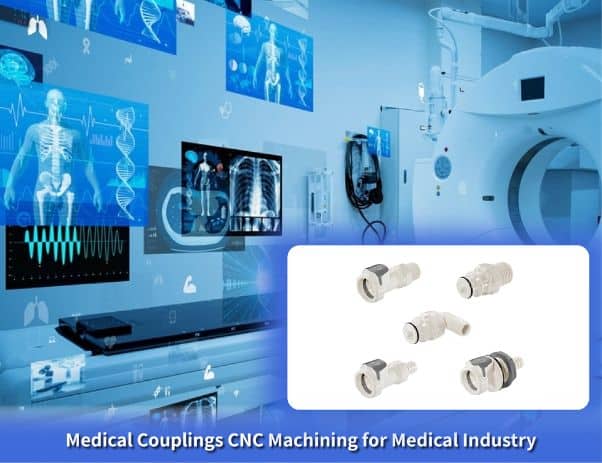
Our precision manufacturing capabilities are widely used in the medical industry. CNC machining, sheet metal fabrication and other technologies ensure high precision and heat resistance in the application of medical grade materials such as titanium alloy and PEEK.

Explore Other Medical Components

Browse our extensive selection of CNC machined medical parts, engineered to meet the highest quality and hygiene standards. From implant-grade components and instrument handles to housings for imaging systems and lab automation equipment, we deliver precision solutions for the evolving needs of the medical industry.

Medical Scalpel Components Machining Capabilities

Our staff of medical device machinists designs scalpel components CNC Machining for Medical Industry. Equipped with Swiss-type CNC machines and CNC precision grinding machines, they handle standard scalpel handles size 3, 4, 7 and special handles designed with ergonomic finger grips and added safety features. every scalpel handle is designed to maintain blade security during use, provide control for the surgeon during the procedure and resist long-term sterilization.

We perform Swiss turning, thread grinding, knurling, and grinding to achieve electropolished blade attachment and biocompatible surface finishing, blade retention tests, and dimensions verification. Medical grade scalpel components are machined from Alloy 304, 316L, 420, 440C stainless steels, Ti-6Al-4V ELI titanium alloy, anodized medical grade aluminum, and other metals to give outstanding biocompatibility and corrosion resistance in the medical field during repetitive cycles of sterilization.
milling

CNC Machining

sheet metal

Sheet Metal Fabrication

edm

Wire EDM

Aerospace
Materials & Finishes

Materials
We provide a wide range of materials, including metals, plastics, and composites.
Finishes
We offer superior surface finishes that enhance part durability and aesthetics for applications requiring smooth or textured surfaces.

Specialist Industries

you are welcome to emphasize it in the drawings or communicate with the sales.

Materials for Scalpel Components

We provide machined scalpel components from various metals in our CNC machine shop. We maintain 10+ medical devices grade metals and biocompatible alloys to provide the materials for rapid prototyping and precision manufactured surgical instruments and to ensure consistent quality compliance with FDA standards on material.
Aluminum Image

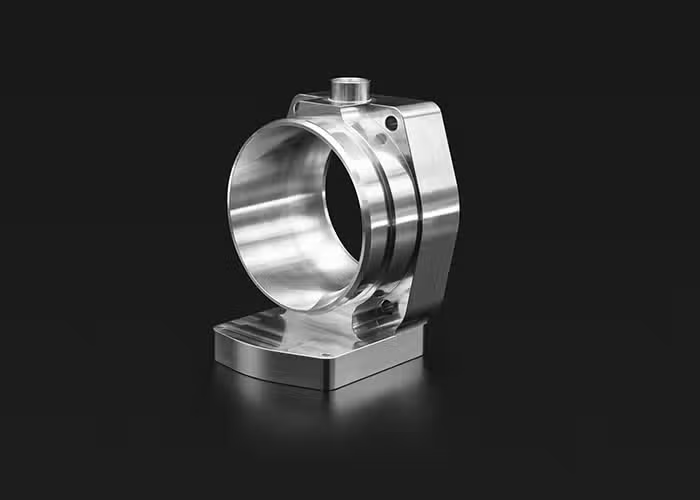
High machinability and ductility. Aluminum alloys have good strength-to-weight ratio, high thermal and electrical conductivity, low density and natural corrosion resistance.
Price
$ $ $
Lead Time
< 7 days
Tolerances
Down to ±0.003 mm
Max part size
3000*2200*1100 mm
Min part size
2*2*2 mm
Stainless steel Image

Stainless steel alloys have high strength, ductility, wear and corrosion resistance. They can be easily welded, machined and polished. The hardness and the cost of stainless steel is higher than that of aluminum alloy.

Price
$ $ $
Lead Time
< 7 days
Tolerances
Down to ±0.005 mm
Max part size
3000*2200*1100 mm
Min part size
2*2*2 mm
Steel Image

Steel is a strong, versatile, and durable alloy of iron and carbon. Steel is strong and durable. High tensile strength, corrosion resistance heat and fire resistance, easily molded and formed. Its applications range from construction materials and structural components to automotive and aerospace components.

Price
$ $ $ $ $
Lead Time
< 10 days
Tolerances
Down to ±0.001 mm (routing)
Max part size
3000*2200*1100 mm
Min part size
2*2*2 mm
Titanium Image

Titanium is an advanced material with excellent corrosion resistance, biocompatibility, and strength-to-weight characteristics. This unique range of properties makes it an ideal choice for many of the engineering challenges faced by the medical, energy, chemical processing, and aerospace industries.

Price
$$$
Lead Time
< 10 days
Tolerances
Down to ±0.005 mm
Max part size
3000*2200*1100 mm
Min part size
2*2*2 mm
Bronze Image

Highly resistant to seawater corrosion. The material’s mechanical properties are inferior to many other machinable metals, making it best for low-stress components produced by CNC machining.

Price
$ $ $ $ $
Lead Time
< 10 days
Tolerances
Down to ±0.005 mm
Max part size
3000*2200*1100 mm
Min part size
2*2*2 mm
Brass Image

Brass is mechanically stronger and lower-friction metal properties make CNC machining brass ideal for mechanical applications that also require corrosion resistance such as those encountered in the marine industry.

Price
$$$
Lead Time
< 10 days
Tolerances
Down to ±0.005mm
Max part size
3000*2200*1100 mm
Min part size
2*2*2 mm
Copper Image

Few metals have the electric conductivity that copper has when it comes to CNC milling materials. The material’s high corrosion resistance aids in preventing rust, and its thermal conductivity features facilitate CNC machining shaping.

Price
$$$
Lead Time
< 10 days
Tolerances
Down to ±0.005 mm
Max part size
3000*2200*1100 mm
Min part size
2*2*2 mm
Zinc Image

Zinc is a slightly brittle metal at room temperature and has a shiny-greyish appearance when oxidation is removed.

Price
$ $ $ $ $
Lead Time
< 10 days
Tolerances
Down to ±0.005 mm
Max part size
3000*2200*1100 mm
Min part size
2*2*2 mm
Iron Image

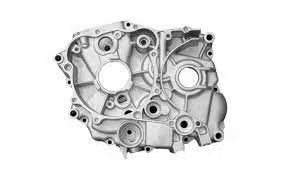
Iron is an indispensable metal in the industrial sector. Iron is alloyed with a small amount of carbon – steel, which is not easily demagnetized after magnetization and is an excellent hard magnetic material, as well as an important industrial material, and is also used as the main raw material for artificial magnetism.
Price
$ $ $ $ $
Lead Time
< 10 days
Tolerances
Down to ±0.005 mm
Max part size
3000*2200*1100 mm
Min part size
2*2*2 mm
Magnesium Image

Due to the low mechanical strength of pure magnesium, magnesium alloys are mainly used. Magnesium alloy has low density but high strength and good rigidity. Good toughness and strong shock absorption. Low heat capacity, fast solidification speed, and good die-casting performance.

Price
$ $ $ $
Lead Time
< 7 days
Tolerances
Down to ±0.005 mm
Max part size
3000*2200*1100 mm
Min part size
2*2*2 mm
Let’s Build Something Great, Together

FAQs: Scalpel Components for Medical Applications

Components of a scalpel include the reusable handles and the disposable blades of a scalpel instrument. Each blade is designed for a specific surgical purpose, and tissue is incised or excised using the instrument. Scalpel handles are categorized into various types: standard scalpel handles, which include size 3 for blades 10 through 15, size 4 for blades 20 to 25, and size 7 for blades 11 and 15; safety scalpel handles which retract the blade to prevent needlestick injuries; and ergonomic handles or textured grips designed for control with disposable blades, and precision in longer surgical procedures. Custom or specialty handles include mini-blade holders, beaver blade holders, and scalpel blade removers which are designed to offer safe disposal mechanisms.

Stainless steel type 304, 316L, 420, and 440C, is the preferred material for scalpel handles due to its high resistance to corrosion and to sterilization chemicals; biocompatibility; strength; and retention for blades and ability to achieve mirror polish under 0.2 Ra microns. Titanum alloys like Ti-6Al-4V ELI are highly biocompatible and light which reduce hand fatigue of the surgeon by 30% when performing longer procedures. Through 1000 cycles of sterilization, titanium maintains corrosion resistance. Medical grade aluminum is used for cost-effective disposable handles due to its strength-to-weight ratio, corrosion resistance, anodized aluminum, and also lightweight construction which allows for color coded handles to be created for different blade sizes.

Swiss-type CNC turning creates scalpel handles from bar stock in one operation, including slots for blade attachments, grips, and mounting features, and takes under 90 seconds per handle. Thread cutting blade attachment mechanisms to within ±0.0005 inches. Knurling grip surfaces for handle in moist surgical conditions. Slot milling attachment channels with control width and depth. Electropolishing micro-burrs, and super smooth surfaces below 0.1 Ra microns, prevents bacteria adhesion. Marks scalpel handles with laser marking to provide permanent identification and including size, manufacturer, and lot numbers that endure sterilization.

We maintain blade slots to dimensions within ±0.0005 inches for secure blade retention, grip diameters to tolerances within ±0.002 inches, thread ±0.0003 inches for safety mechanisms, and surfaces finishes below 0.1 Ra microns for cleanability, overall lengths ±0.010 inches, and blade seating flatness 0.001 inches for alignment and precision during cutting.

Yes. We offer flexible manufacturing capabilities including:
Rapid prototyping for design validation
Low-volume production for specialized applications
High-volume production with consistent quality control
Full structural and dimensional verification at every stage

All components are manufactured under ISO 13485 certified quality management systems for medical devices, ensuring full compliance with FDA regulations for Class I surgical instruments, European Medical Device Regulation (MDR) requirements, material biocompatibility testing per ISO 10993, ASTM F899 for stainless steel surgical instruments, complete traceability from raw material through final product, and adherence to Good Manufacturing Practices ensuring patient and healthcare worker safety.

We provide comprehensive finishing solutions tailored to aerospace requirements:
Anodizing (Type II and Type III)
Passivation for corrosion resistance
Precision polishing for aerodynamic surfaces
Custom protective coatings and thermal barriers
Standard scalpel handles from established designs require 8-12 business days which include Swiss turning, surface treatment, and quality verification. While custom safety scalpel mechanisms with specific features will require 3-4 weeks for completion. Surgical evaluation prototype runs can be completed in 5-8 days depending on the availably of materials and finish requirements. This timeframe allows for rapid design validation.

Certainly, we create extended-length handles for deep surgical access during thoracic and abdominal procedures, as well as miniature handles for ophthalmic and microsurgery with blade holders under 10 millimeters. We also design ergonomic handles aimed at specific surgical grips to reduce hand fatigue during procedures lasting more than 4 hours. Other handles include safety retractable blade safety handles designed to comply with OSHA requirements for sharps injury prevention, disposable single-use applications integrated blade handles, and specialty handles for non-standard blades like beaver blades and carbon steel cutting edges.
Got any more questions?