We have moved to a new Website Check Now

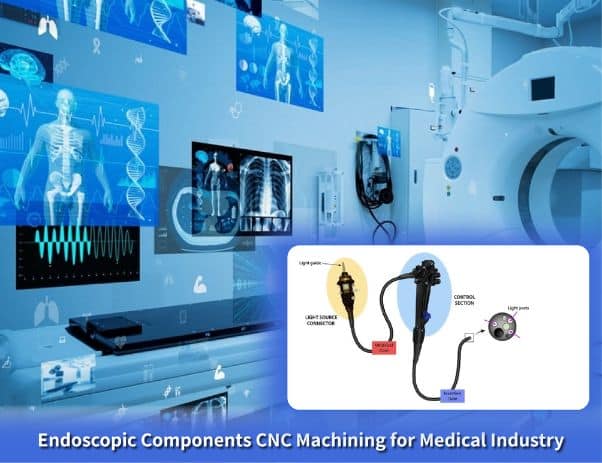
Endoscopic Components CNC Machining for Medical Industry

Endoscopic Components are miniaturized parts that allow for minimally invasive surgery and surgery visualized inside the human body. For Zintilon, specializing in CNC Machining for Endoscopic components encompasses advanced micro-machining capabilities to produce components with clinically accurate dimensions, dependable surface finish, and clinically reliable biocompatibility for diagnostic and therapeutic procedures.
  • Machining for complex miniature geometries and optical interfaces
  • Tight tolerances up to ±0.0003 in
  • Precision Swiss turning, micro-milling & electropolishing
  • Support for rapid prototyping and full-scale production
  • ISO 13485-certified medical device manufacturing

Trusted by 15,000+ businesses

Why Medical Companies
Choose Zintilon

prductivity

Fast Delivery

A professional engineering team that can respond quickly to customer needs and provide one-stop services from design to production in a short period of time to ensure fast delivery.

10x

High Precision

We are equipped with automated equipment and sophisticated measuring tools to achieve high accuracy and consistency, ensuring that every part meets the most stringent quality standards.

world

ISO13485 Certified

As a ISO13485 certified precision manufacturer, our products and services have met the most stringent quality standards in the automotive industry.

From Prototyping to Mass Production

Zintilon offers CNC machining for hospitals, surgical centers, and medical device manufacturers all over the world. We provide Endoscopic components and related instruments for minimally invasive surgery.

Prototype Endoscopic Components

Obtain high-precision prototypes of endoscopic components that accurately replicate your final design. Test fit dimensions, check for optical alignment, and confirm appropriate sterilization compatibility before production for medical use at target scale.

Key Points:

  • Rapid prototyping with high precision

  • Tight tolerances (±0.0003 in)

  • Test design, material, and functionality early

3 Axis CNC Machined Stainless Steel Passivation

EVT – Engineering Validation Test

Endoscopic component prototypes should be swiftly designed to ensure that all functionality and clinical requirements are satisfied. This will identify problems early in the design process for a seamless transition into full-scale manufacture of the medical device.

Key Points:

  • Validate prototype functionality

  • Rapid design iterations

  • Ensure readiness for production
Anodized Aluminum 1024x536

DVT – Design Validation Test

Before mass production, ensure design accuracy and optimal visualization by validating the dimensional accuracy and optical performance of the endoscopic components using different materials and surface treatments during the pre-production phase.

Key Points:

  • Confirm Design Precision.

  • Evaluate Various Materials And Surface Options.

  • Confirm Production Performance Accuracy.
design aluminium

PVT – Production Validation Test

Before commencing mass production of endoscopic components, validating production scale and identifying preemptive production challenges, to enable manufacturing consistency and efficiency of the components, thus ensuring quality control.

Key Points:

  • Production Steps Are Test For Quality Control.

  • Mass Production Lines Are control.

  • Automated Quality Control
Anodized Titanium Fastener

Mass Production

Delivering on client expectations of quality and punctuality while maintaining safe and efficient production of clinical endoscopic components, ensuring reliable endoscopic productivity, function, and readiness for distribution to healthcare centers and medical facilities.

Key Points:

  • Mass Production Grade Control.

  • Production Grade CNC Accuracy.

  • Medical Device Delivery Systems To Clients.
production

Simplified Sourcing for
the Medical Industry

Our precision manufacturing capabilities are widely used in the medical industry. CNC machining, sheet metal fabrication and other technologies ensure high precision and heat resistance in the application of medical grade materials such as titanium alloy and PEEK.

Explore Other Medical Components

Browse our extensive selection of CNC machined medical parts, engineered to meet the highest quality and hygiene standards. From implant-grade components and instrument handles to housings for imaging systems and lab automation equipment, we deliver precision solutions for the evolving needs of the medical industry.

Medical Endoscopic Components Machining Capabilities

Our precision Swiss-type CNC machining capabilities, coupled with micro machining capabilities, along with the high specialization of our personnel in the medical devices field, enable us to deliver CNC Machining for Medical Endoscopy Components with great focus and attention to detail. We design, optimize and manufacture components for endoscope shafts, instrument channel tubes, and lens assemblies with advanced critical optical components for tight pair optical alignment. Each of these components is highly miniaturized, designed for smooth tissue interaction, and intended for durability to withstand long-term sterilization.

Fully integrated design, miniaturization, and smooth sterile biocompatible finishing is achieved with Swiss precision turning, micro milling, laser machining, and electropolishing for optical surfaces. We verify optical and dimensional alignment and inspect compliance with the specified sanitation and sterilization design requirements. Each endoscopic component is manufactured using biocompatible stainless steel (304, 316L, 420, 17-4 PH), titanium alloys (Ti-6Al-4V ELI), brass, medical-grade polymers, and various other medical stainless steels, ensuring outstanding biocompatible sterilization, and resistance to corrosion or degradation during clinical procedures.'
milling

CNC Machining

sheet metal

Sheet Metal Fabrication

edm

Wire EDM

Aerospace
Materials & Finishes

Materials
We provide a wide range of materials, including metals, plastics, and composites.
Finishes
We offer superior surface finishes that enhance part durability and aesthetics for applications requiring smooth or textured surfaces.

Specialist Industries

you are welcome to emphasize it in the drawings or communicate with the sales.

Materials for Endoscopic Components

Our CNC Machining Endoscopic Components Medical Device Shop has a well diversified stock of materials to CNC Machine Endoscopic Components with Medical Industry. We possess over 15 grades of medical stainless steels, as well as polymers and other specialties alloys to streamline and control quality for rapid prototyping and high precision miniature component manufacturing , utilizing materials that meet the FDA complaint.
Aluminum Image

High machinability and ductility. Aluminum alloys have good strength-to-weight ratio, high thermal and electrical conductivity, low density and natural corrosion resistance.
Price
$ $ $
Lead Time
< 7 days
Tolerances
Down to ±0.003 mm
Max part size
3000*2200*1100 mm
Min part size
2*2*2 mm
Stainless steel Image

Stainless steel alloys have high strength, ductility, wear and corrosion resistance. They can be easily welded, machined and polished. The hardness and the cost of stainless steel is higher than that of aluminum alloy.

Price
$ $ $
Lead Time
< 7 days
Tolerances
Down to ±0.005 mm
Max part size
3000*2200*1100 mm
Min part size
2*2*2 mm
Steel Image

Steel is a strong, versatile, and durable alloy of iron and carbon. Steel is strong and durable. High tensile strength, corrosion resistance heat and fire resistance, easily molded and formed. Its applications range from construction materials and structural components to automotive and aerospace components.

Price
$ $ $ $ $
Lead Time
< 10 days
Tolerances
Down to ±0.001 mm (routing)
Max part size
3000*2200*1100 mm
Min part size
2*2*2 mm
Titanium Image

Titanium is an advanced material with excellent corrosion resistance, biocompatibility, and strength-to-weight characteristics. This unique range of properties makes it an ideal choice for many of the engineering challenges faced by the medical, energy, chemical processing, and aerospace industries.

Price
$$$
Lead Time
< 10 days
Tolerances
Down to ±0.005 mm
Max part size
3000*2200*1100 mm
Min part size
2*2*2 mm
Bronze Image

Highly resistant to seawater corrosion. The material’s mechanical properties are inferior to many other machinable metals, making it best for low-stress components produced by CNC machining.

Price
$ $ $ $ $
Lead Time
< 10 days
Tolerances
Down to ±0.005 mm
Max part size
3000*2200*1100 mm
Min part size
2*2*2 mm
Brass Image

Brass is mechanically stronger and lower-friction metal properties make CNC machining brass ideal for mechanical applications that also require corrosion resistance such as those encountered in the marine industry.

Price
$$$
Lead Time
< 10 days
Tolerances
Down to ±0.005mm
Max part size
3000*2200*1100 mm
Min part size
2*2*2 mm
Copper Image

Few metals have the electric conductivity that copper has when it comes to CNC milling materials. The material’s high corrosion resistance aids in preventing rust, and its thermal conductivity features facilitate CNC machining shaping.

Price
$$$
Lead Time
< 10 days
Tolerances
Down to ±0.005 mm
Max part size
3000*2200*1100 mm
Min part size
2*2*2 mm
Zinc Image

Zinc is a slightly brittle metal at room temperature and has a shiny-greyish appearance when oxidation is removed.

Price
$ $ $ $ $
Lead Time
< 10 days
Tolerances
Down to ±0.005 mm
Max part size
3000*2200*1100 mm
Min part size
2*2*2 mm
Iron Image

Iron is an indispensable metal in the industrial sector. Iron is alloyed with a small amount of carbon – steel, which is not easily demagnetized after magnetization and is an excellent hard magnetic material, as well as an important industrial material, and is also used as the main raw material for artificial magnetism.
Price
$ $ $ $ $
Lead Time
< 10 days
Tolerances
Down to ±0.005 mm
Max part size
3000*2200*1100 mm
Min part size
2*2*2 mm
Magnesium Image

Due to the low mechanical strength of pure magnesium, magnesium alloys are mainly used. Magnesium alloy has low density but high strength and good rigidity. Good toughness and strong shock absorption. Low heat capacity, fast solidification speed, and good die-casting performance.

Price
$ $ $ $
Lead Time
< 7 days
Tolerances
Down to ±0.005 mm
Max part size
3000*2200*1100 mm
Min part size
2*2*2 mm
Let’s Build Something Great, Together

FAQs: Surgical Instruments for Medical Applications

All parts are produced under AS9100D certified quality standards, ensuring compliance with FAA/EASA regulations, traceability, and reliability for critical aerospace components.

Each material offers distinct advantages for surgical instrument applications. Medical-grade stainless steel including 316L for general instruments, 420 for instruments requiring moderate hardness, and 440C for cutting instruments needing superior edge retention provides excellent corrosion resistance to bodily fluids, blood, and sterilization chemicals, adequate hardness for cutting edges and wear resistance, proven biocompatibility with extensive clinical history, cost-effective production for high-volume instruments, magnetic properties useful for retrieval, and ability to achieve mirror-polished surfaces for easy cleaning and bacterial resistance, making it the most widely used material in surgical instrumentation. Titanium alloys including Ti-6Al-4V ELI (Extra Low Interstitial) deliver exceptional strength-to-weight ratio reducing surgeon hand fatigue during prolonged procedures, superior corrosion resistance even in saline environments, non-magnetic properties essential for MRI-compatible instruments, excellent biocompatibility for implantable components, lower thermal conductivity reducing heat transfer during electrosurgery, and distinctive appearance helping differentiate premium instrument sets. Cobalt-chromium alloys offer maximum hardness and wear resistance for cutting instruments requiring the sharpest edges and longest edge retention, exceptional corrosion resistance in harsh chemical environments, high-temperature stability for instruments used with cautery, and superior performance in orthopedic cutting tools and dental burs. Surgical-grade aluminum provides lightweight construction for handheld instruments reducing fatigue, adequate strength for non-cutting applications including retractor handles and instrument cases, excellent machinability for complex geometries, and cost savings for disposable or single-use instruments meeting the growing demand for infection control.

Surgical instrument production utilizes advanced precision machining technologies including multi-axis CNC milling for complex three-dimensional geometries in instrument bodies, handles, and jaw mechanisms, precision CNC grinding for cutting edges on scissors, scalpels, and bone cutting instruments achieving edge sharpness below 5 microns, EDM wire cutting for intricate profiles in thin-section instruments and delicate microsurgical tools, CNC turning for cylindrical handles, shafts, and laparoscopic instrument components, precision drilling and reaming for pivot pins, locking mechanisms, and assembly holes with tolerances within 0.0003 inches, thread milling for threaded connections and adjustment mechanisms, serration cutting on forceps jaws using specialized milling or broaching for controlled tissue grip, ratchet cutting for locking mechanisms on hemostats and needle holders, electropolishing for ultra-smooth biocompatible surfaces removing surface irregularities and improving corrosion resistance, laser marking for permanent instrument identification and traceability, and precision assembly of multi-component instruments including spring mechanisms, pivot joints, and locking systems requiring proper tension and alignment for smooth operation.

We routinely achieve tolerances as tight as ±0.0005 inches on critical instrument features, ensuring precise jaw alignment on forceps and clamps within 0.0003 inches for even gripping pressure across tissue contact surfaces, accurate cutting edge geometry on scissors with blade angles within ±0.5 degrees for clean tissue cutting without tearing, proper pivot hole dimensions for smooth joint operation without excessive play, controlled serration depth and spacing for consistent tissue grip, accurate thread dimensions for secure connections in modular instruments, proper spring pocket dimensions for correct tension in self-opening instruments, and consistent overall dimensions ensuring interchangeability with existing surgical sets and compatibility with sterilization trays and instrument organizing systems used in operating rooms worldwide.

Yes. We offer flexible manufacturing capabilities including:
Rapid prototyping for design validation
Low-volume production for specialized applications
High-volume production with consistent quality control
Full structural and dimensional verification at every stage

Absolutely. All components are manufactured under ISO 13485 certified quality management systems specifically designed for medical device manufacturing, ensuring full compliance with FDA regulations for Class I and Class II medical devices, European Medical Device Regulation (MDR) requirements, material biocompatibility testing per ISO 10993 standards, instrument performance standards including ASTM and AAMI specifications, and complete documentation traceability from raw material certification through final inspection enabling regulatory submissions and clinical use in healthcare facilities worldwide.

We provide comprehensive finishing solutions tailored to aerospace requirements:
Anodizing (Type II and Type III)
Passivation for corrosion resistance
Precision polishing for aerodynamic surfaces
Custom protective coatings and thermal barriers

Lead times vary based on complexity and regulatory requirements. Standard surgical instruments with established designs typically require 12–18 business days including passivation and quality verification, while custom instruments with specialized features and first-article inspection need 4–6 weeks. Prototype runs for surgeon evaluation and clinical testing can be completed as fast as 8–12 days depending on material availability and finishing requirements. We provide detailed production schedules during the quotation process including time for material certifications and regulatory documentation.

Yes. Our advanced precision machining capabilities combined with specialized tooling can produce custom microsurgical instruments with working tips as small as 0.5 millimeters for ophthalmic surgery, neurosurgery, and plastic surgery applications. We machine ultra-fine forceps tips with precise alignment, delicate scissors with thin blades, specialized retractors for minimally invasive access, and micro-clamps for vessel anastomosis. Using EDM wire cutting, precision grinding, and microscopic inspection, we achieve the dimensional accuracy and surface quality required for delicate tissue manipulation, enabling surgeons to perform complex procedures including cataract surgery, retinal repair, nerve grafting, and reconstructive microsurgery with instruments designed specifically for their surgical technique and patient anatomy.

The advantages of precision CNC Mr. Rocco manufacturing extends across multiple areas for measurable performance benefits. Furthermore, aligning the jaws of forceps and clamps guarantees even pressure distribution across the tissues because of the contact surface, so delicate structures aren’t crushed or torn while being gripped securely around blood vessels, organs, and sutures during the critical surgical step. Cleaving tissue can also be performed as lightly as possible while the patient is being operated on because, when this is done, precise angles and micro-geometries of cutting edges with a CNC machined are optimally set. Electropolished surface surgical instruments that need to be thoroughly cleaned and sterilized because they are on the protocols for infection control in hospitals because polishing removes microscopic crevices where bacteria like to live. Proper machining on pivot joints that guarantees smooth opening and closing action achieves thousands of cycles of smooth cycles without binding or excessive play surgical precision is lost. Self-opening instruments have controlled spring tension to reduce fatigue for the surgeon’s hands that are gripping and releasing during long tedious stretches of concentration. Handle designs that are counterbored on and machined to the surgeon specs also help the surgeon on intricate work that need utmost control where feedback is important. On forceps jaws, optimal tissue grip without slippage and crushing is achieved because of the precise set geometry of the serrations. Lastly, in modular instruments that are customized, thread dimensions are set accurately to ensure the strong connection that is set is not lost during use.

The integrity of the instruments is maintained even after 134-degree celsius autoclaving, chemical sterilization, and gamma-radiation sterilization cycles as a result of the corrosion-resistant materials and surface treatments. The assurance of consistent quality in manufacturing is critical to the maintenance of the uniformity of performance attributes of instrument sets so that surgical teams are facilitated to teach and develop muscle memory as well as confidence in their technique. The biocompatible materials and their finishes used eliminate the possibility of irritating tissue and allergic reactions during the contact of the patient while the surgical instruments that are machined to precise standards are the foundation of clinical success for surgical procedures, including but not limited to, minimally invasive operations that do not traumatize the patient, sub millimeter precision microsurgery, endoscopies performed through tiny incisions, surgeries requiring reliable hemostasis such as cardiovascular operations, orthopedics that demand accurate precision in cutting and manipulating bones, delicate eye surgeries, as well as advanced techniques in neurosurgery. Surgeons are thus provided with dependable instruments that maintain their performance even during prolonged surgery, sharpness and functionality over years of service, and compliance to stringent sterilization control standards. The end result is a better patient outcome in the form of fewer complications and quicker recovery.
Yes. We design ultra-thin components for pediatric endoscopy with diameters under 3 millimeters, flexible shaft components for navigating challenging anatomy, integrated working channels for simultaneous visualization and therapy, and disposable components for single-use designed components that lower cost sterilization. We also develop robotic endoscope components for computer-assisted procedures and custom design parts for bronchoscopy, colonoscopy, arthroscopy, laparoscopy, and emerging natural orifice translumen endoscopic surgery.

Control of the outer diameter within ±0.0003 inches, and walls within ±0.0002 inches constitutes the design principles for components that achieve empty space that reduce trauma and tissue damage. Focusing on the element walls also reduces the risk of collapse or kinking. Working surfaces smoothness and the polishing to achieve lower than 0.1 Ra clearance facilitates the flow of the instrument and cleaning validation, thus the instrument. Concentricity and tolerance of 0.0003 inches from the center also preserves the optical alignment to the instrument and image retention. Electropolishing traps no micro-structural features which would allow bacteria to multiply. We achieve a balance of flexible navigation yet rigid tissue advancement, and more than 500 sterilization cycles with no component flex and optic drop.
Got any more questions?